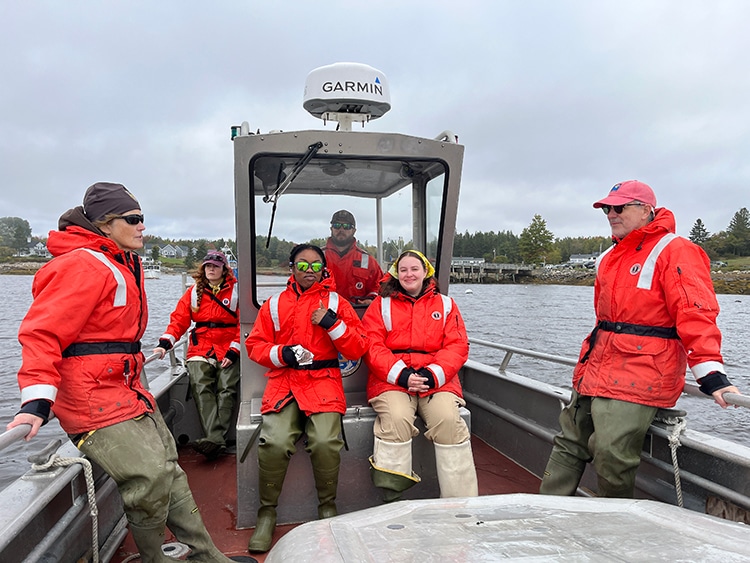
The Weitzman School of Design, University of Pennsylvania, and Columbia University’s Graduate School of Architecture, Planning, and Preservation are visiting both mainland and offshore Maine light stations during their graduate preservation/planning studios this fall.
Shown here are Weitzman School of Design students, led by Randall Mason, PhD FAAR (right), being transported to Petit Manan Light Station by U.S. Fish & Wildlife Service personnel.
(Photo by Bob Trapani, Jr.)
The American Lighthouse Foundation continues its dedicated work to help preserve and make lighthouses more resilient in the face of climate vulnerabilities.
One of the latest happenings, which kicked off on October 1, 2026, is an exciting collaboration between the American Lighthouse Foundation, World Monuments Fund, Maine Preservation, Weitzman School of Design, University of Pennsylvania, and Columbia University’s Graduate School of Architecture, Planning, and Preservation.
Randall Mason, PhD FAAR, Professor and Chair of Historic Preservation at the Weitzman School of Design, University of Pennsylvania, and Erica Avrami, PhD, James Martson Fitch Associate Professor of Historic Preservation, Columbia University, are teaching graduate preservation/planning studios this fall focused on Maine lighthouses.
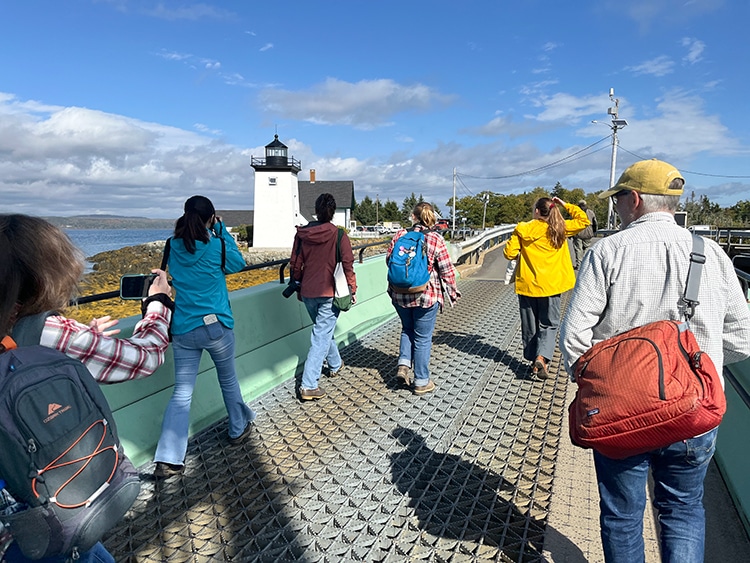
During their fall 2026 studio site visits, UPENN and Columbia University graduate students are immersing themselves in “real world” preservation situations with light station stewards, co-workers, logistical constraints, stakeholders, available data, and unknowns.
Shown here are Weitzman School of Design students arriving at Grindle Point Light Station on Islesboro, Maine.
(Photo by Bob Trapani, Jr.)
The University of Pennsylvania’s studio is approaching a small number of specific lighthouses at the scale of building, site, and landscape – seeking to gain familiarity and experience with the comprehensive process of project/site decision-making through ‘conservation planning.’
According to UPENN’s Professor Mason, “Preservation concerns are newly urgent in the face of damaging storms, sea-level rise, community dislocation and other longer-term challenges. Standard preservation options for lighthouses are inadequate to these challenges – simply repairing or rebuilding in-place, or in some extreme cases moving buildings entirely. What are the alternatives? Adding new fabric? Redesigning landscape? Using digital technology? Applying a ‘curated decay’ approach?”
Columbia University’s studio is approaching the entire collection of 60+ lighthouses through systems perspectives, looking regionally at climate impacts, community well-being, economic factors, and more.
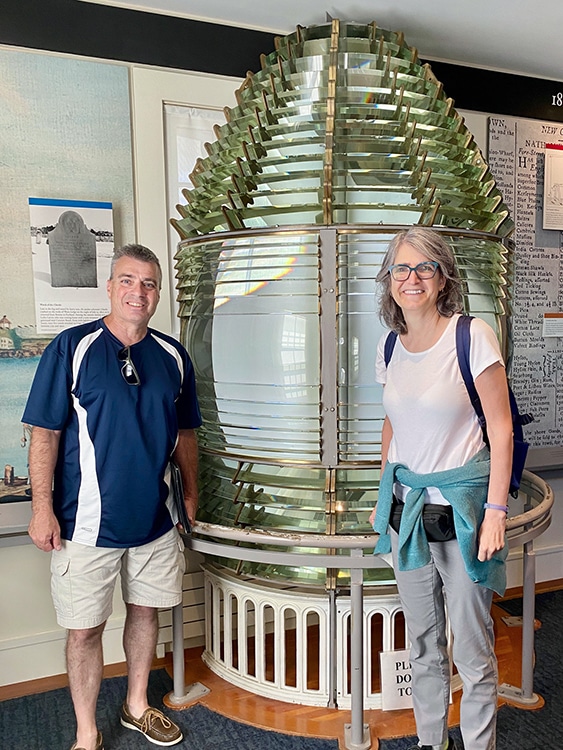
(L to R) Bob Trapani, Jr., Executive Director for the American Lighthouse Foundation and Erica Avrami, PhD, James Marston Fitch Associate Professor of Historic Preservation, Graduate School of Architecture, Planning and Preservation, Columbia University, inside the Museum at Portland Head Light.
(Photo by Ann-Marie Trapani)
According to Columbia University’s Professor Avrami, “Rather than asking how lighthouses might be protected, this studio reframes the question to examine how the frontline locations of lighthouses can make them drivers of climate action that protects communities – their economies, livelihoods, and built environments – through co-learning, participatory planning, and innovation. Emphasis is placed on analyzing social-spatial conditions, policy and institutional contexts, and historical and contemporary factors contributing to the climate vulnerability at the community level.”
The Weitzman School of Design, University of Pennsylvania, studio is focusing on the following Maine light stations: Bass Harbor Head, Grindle Point, Marshall Point, Petit Manan and Rockland Breakwater. During their time in Maine, the students are also visiting other light stations, from the Portland region to the Midcoast.
The Columbia University Graduate School of Architecture, Planning and Preservation studio is focusing on the following Maine light stations: Cape Elizabeth east and west towers, Cape Neddick, Doubling Point, Goat Island, Kennebec River Range, Marshall Point, Owls Head, Portland Breakwater, Portland Head, Rockland Breakwater, Spring Point Ledge, Squirrel Point and Wood Island.
Stay tuned for more updates about these site visits and the collaboration between American Lighthouse Foundation, World Monuments Fund, Maine Preservation, Weitzman School of Design, University of Pennsylvania, and Columbia University’s Graduate School of Architecture, Planning, and Preservation!
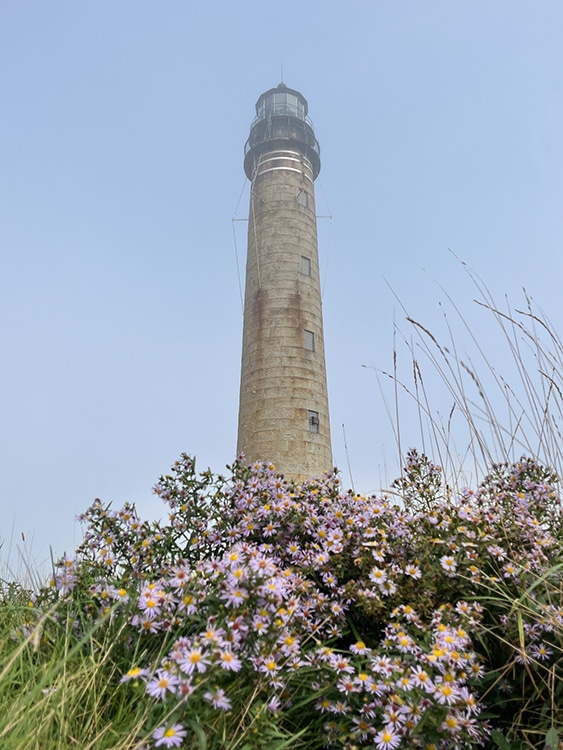
While at Maine light stations such as Petit Manan, students from the Weitzman School of Design, University of Pennsylvania, and Columbia University’s Graduate School of Architecture, Planning, and Preservation, will…
(Photo by Bob Trapani, Jr.)
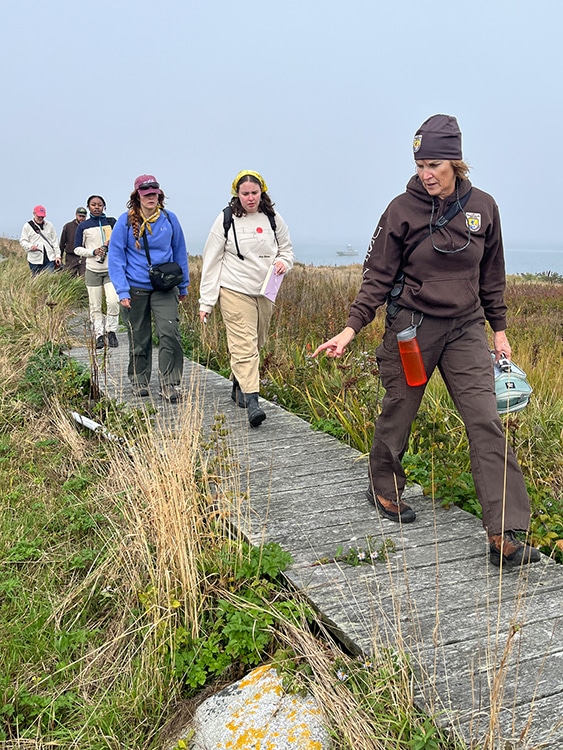
Learn about light station properties with site stewards like Linda Welch, Supervisory Wildlife Biologist for the U.S. Fish & Wildlife Service, and…
(Photo by Bob Trapani, Jr.)
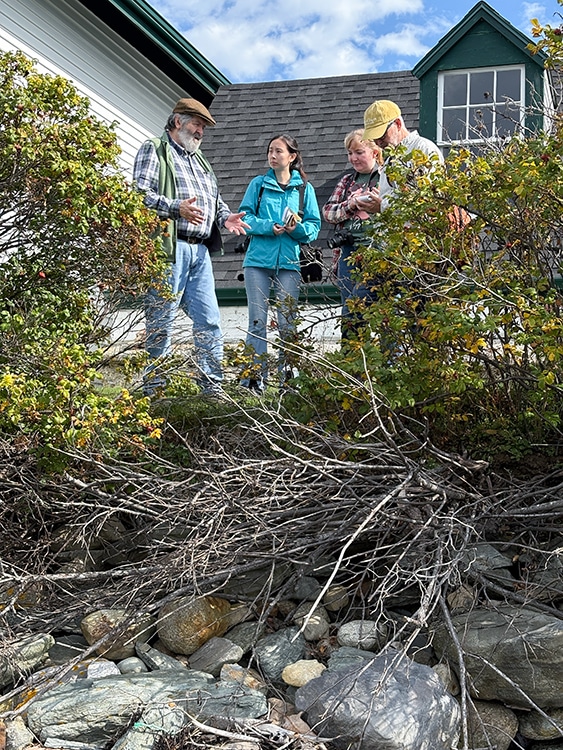
Talk with light station stewards such as Edward Bacon (left), Chairperson for the Grindle Point Light Station Committee, about site preservation and climate challenges, and…
(Photo by Ann-Marie Trapani)
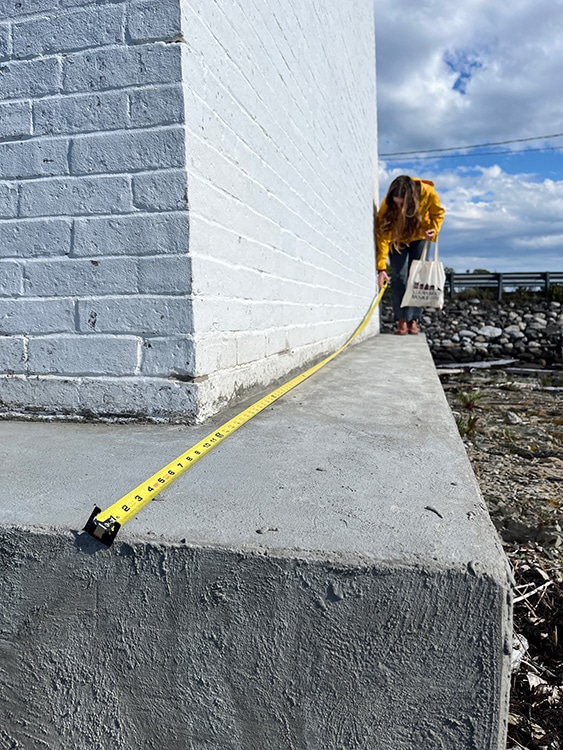
Carry out research, make observations, collect data at Maine light stations, and…
(Photo by Bob Trapani, Jr.)
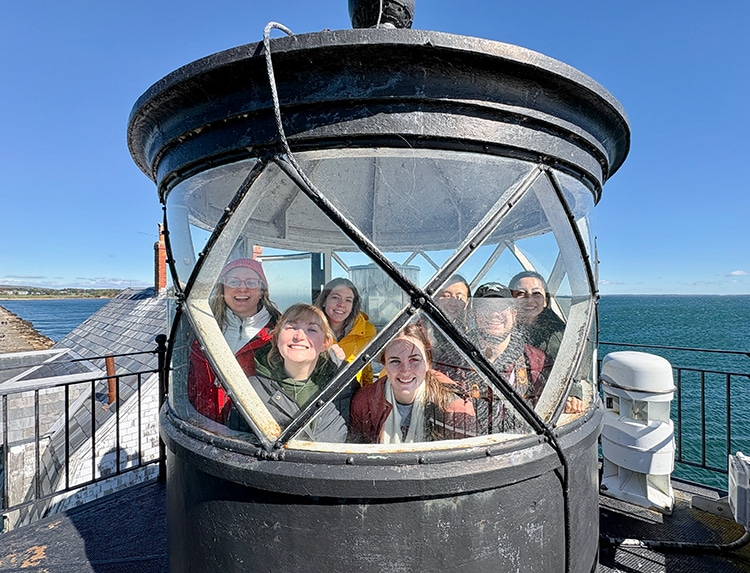
Lean on the TEAM approach during their studio, while sprinkling in some moments of FUN too!
(Photo by Ann-Marie Trapani)


Leave a Reply