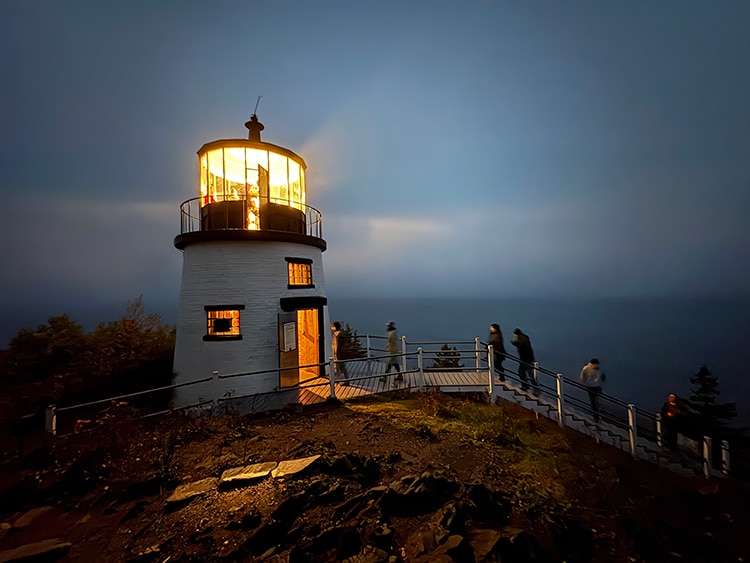
Columbia University graduate students visited Owls Head Light at dusk on October 16, 2026.
(Photo by Ann-Marie Trapani)
A team of Columbia University graduate students in historic preservation and urban planning visited ALF’s Owls Head Lighthouse on October 16th as part of their research for a studio course, Heritage on the Front Lines: Lighthouses as drivers of coastal adaptation and community resilience.
Owls Head was one of fourteen Maine light stations visited by the student group from Columbia University’s Graduate School of Architecture, Planning and Preservation (GSAPP) during their research trip to Maine from October 11th through the -17th.
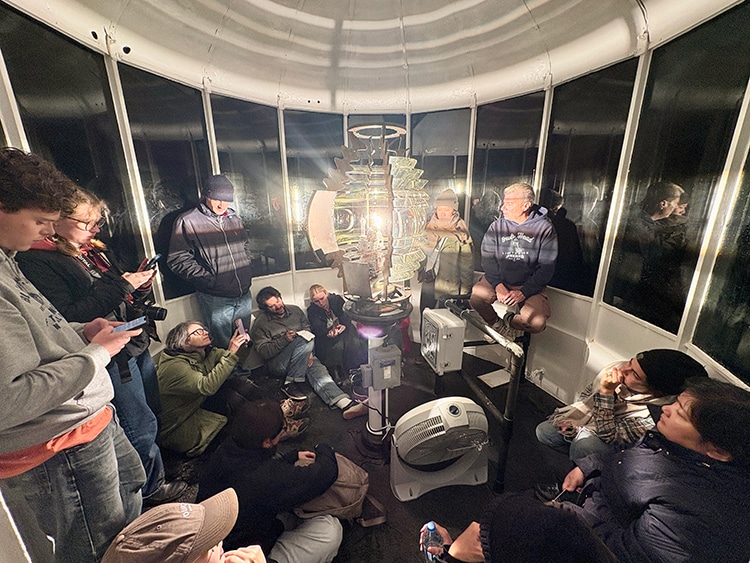
Columbia University GSAPP students – led by Professor Erica C. Avrami (left, with green coat), talked with ALF Executive Director Bob Trapani, Jr. (right, sitting on handrail), about preservation, history, visitation, etc., during their time at Owls Head Light on 10/16/26.
(Photo by Ann-Marie Trapani)
The studio team is working in cooperation with the American Lighthouse Foundation, World Monuments Fund, and Maine Preservation to examine how the long and dynamic history of adapting lighthouses to changing environmental, economic, political, and technological conditions can inform contemporary efforts to advance community and coastal resilience, while ensuring the continued use of these iconic structures.
According to the Advanced Preservation Planning & Policy Studio created by Professor Erica C. Avrami of Columbia University’s GSAPP, “Lighthouses are on the front lines of climate change. Rather than simply asking how lighthouses might be protected, this studio reframes the question to examine how the frontline locations of light stations can make them drivers of climate action in ways that capitalize on them as a system. The intention is to explore how they might further protect and/or benefit communities—their economies, livelihoods, and built environments—through co-learning, participatory planning, networked programming, and innovative research and projects.”
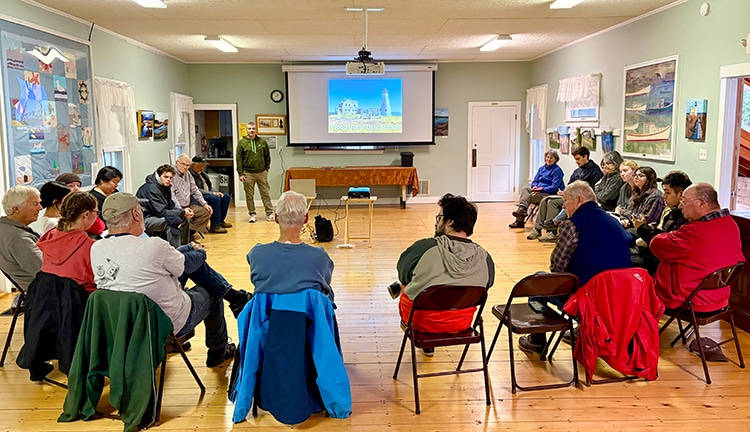
Though Columbia University GSAPP students could not visit Wood Island Light Station on October 13th due to rough sea conditions, they did have the opportunity to talk with ALF/FOWIL reps for two-plus hours about climate threats facing the historic structures at Wood Island.
(Photo by Ann-Marie Trapani)
Prior to their visit to Owls Head Lighthouse, three days earlier, the students met with representatives from the American Lighthouse Foundation and its chapter – Friends of Wood Island Lighthouse, at the Biddeford Pool Community Center, to discuss climate vulnerabilities at Wood Island Light Station. Conversation focused on the serious erosion concerns threatening the historic lighthouse on the east side of the island, and the wooden boathouse on the west side of the island.
Moving forward, stay tuned for a complete overview of Columbia University’s fieldwork. Once the studio is completed, a public report will be released in spring 2027 on the student’s research and findings.
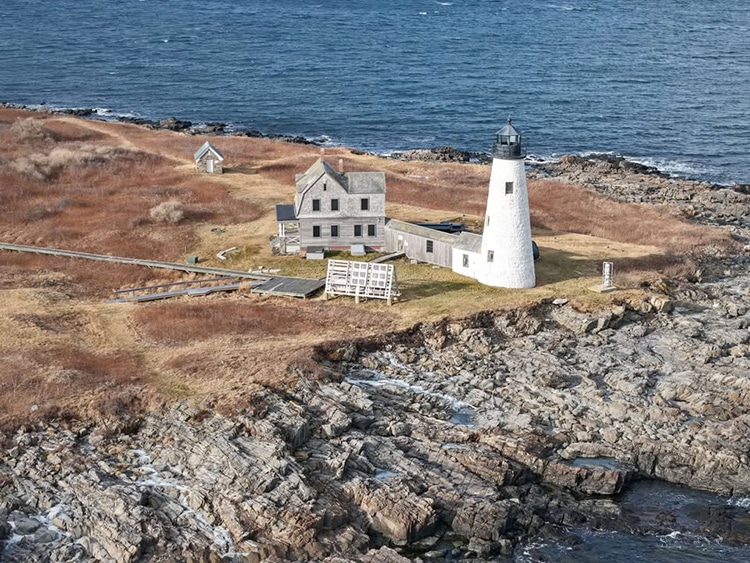
ALF and FOWIL reps spoke at length with Columbia University GSAPP students about the advancing erosion in front of Wood Island Lighthouse on 10/13/26.
(Photo by Josh McPhail)
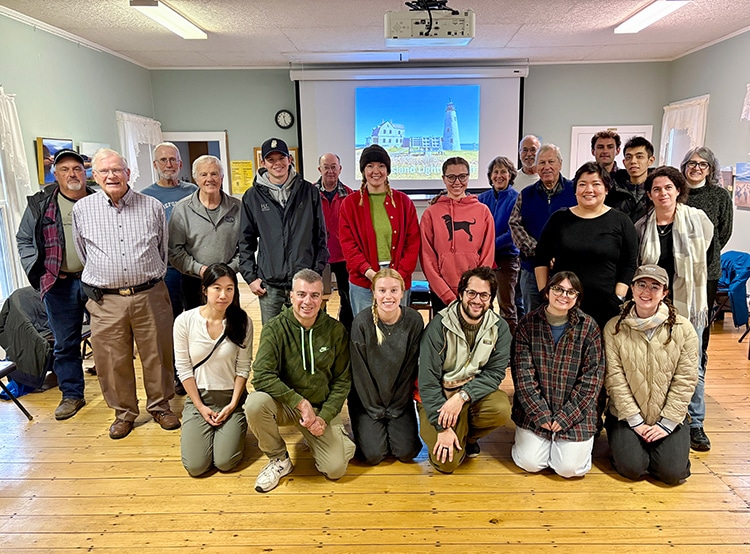
“People working together by listening, learning, sharing and inspiring each other to new heights makes all the difference in the world when it comes to sustainable lighthouse preservation and climate resiliency efforts.” Bob Trapani, Jr., ALF Executive Director
Members of the American Lighthouse Foundation and its chapter, Friends of Wood Island Lighthouse, met with Columbia University Graduate School of Architecture, Planning and Preservation to talk about Wood Island Light Station on 10/13/26.
(Photo by Ann-Marie Trapani)
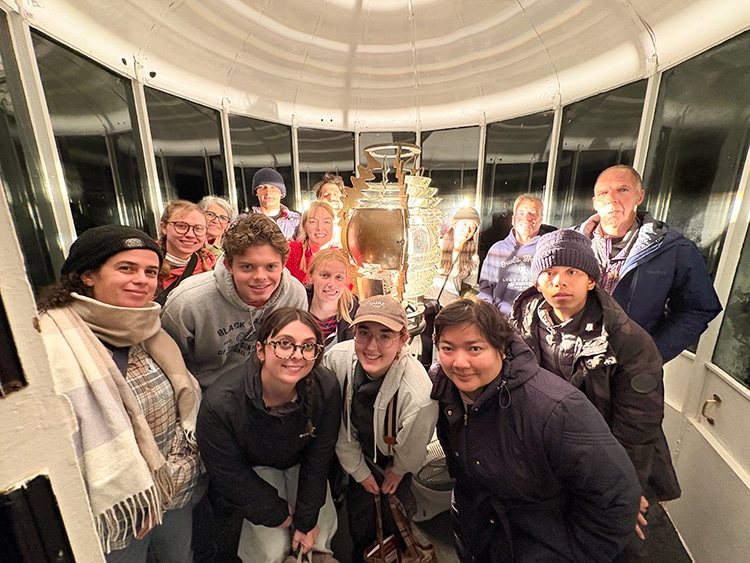
Columbia University GSAPP students visited Owls Head Light on October 16, 2026, to talk about the historic site and lighthouse preservation/resiliency topics in general.
(Photo by Ann-Marie Trapani)
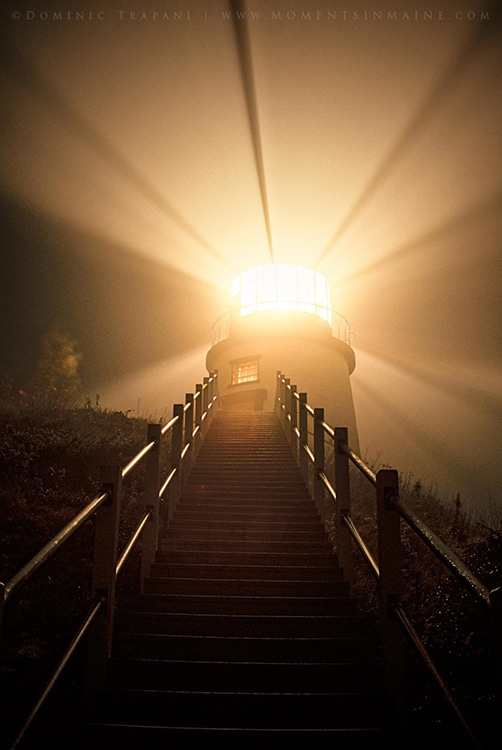
Columbia University GSAPP students enjoyed visiting Owls Head Lighthouse at night and seeing up close the sentinel’s fourth order Fresnel lens inside the lantern, aglow.
(Photo by Dominic Trapani)


Leave a Reply