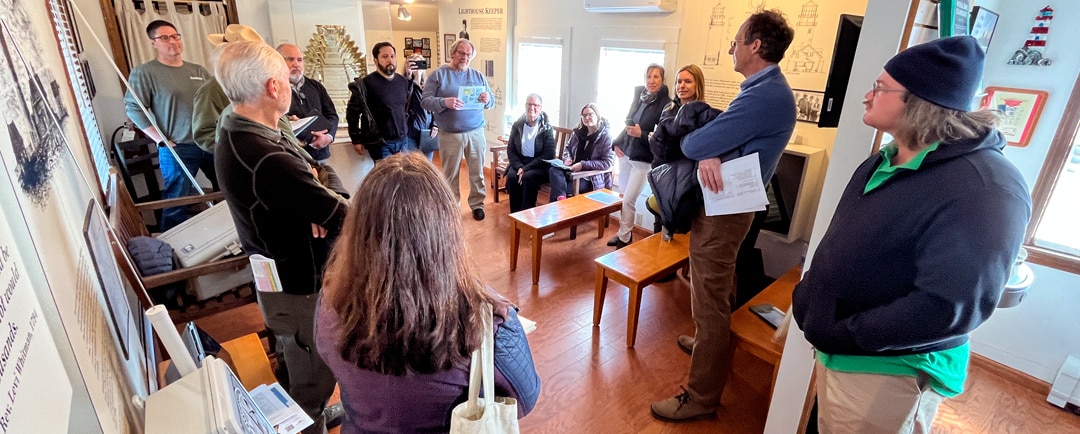
A wide-range of passionate stakeholders from Cape Cod and the Islands, gathered earlier this spring to shine a light on the plight of the endangered North Atlantic right whale and the applied science opportunities that can help save them from extinction.
(Photo by Bob Trapani, Jr.)
The sea is a mainstay for nearly all that we hold dear along our wondrous coast. This magnificent expanse, with its boundless layers of mystery, beckons and inspires us like no other. For the sea, with its interconnected biodiversity, is the fabric that binds us all.
The sea is also a sustainer of life above and below its embrace – all of which comes with an important responsibility to protect. When an integral aspect of this precious domain is in peril, it is up to the human collective to rally as one and safeguard that which is threatened.
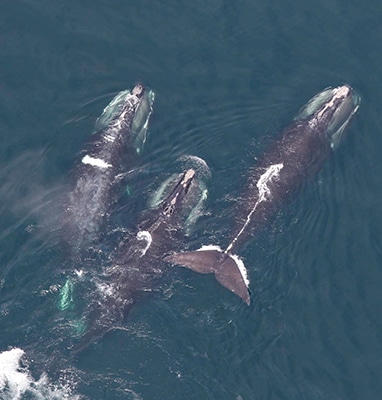
North Atlantic right whales are critically endangered.
(NOAA photo credited to Brigid McKenna, Center for Coastal Studies)
The North Atlantic right whale is one such marine mammal that is critically endangered. The primary threats to their existence are vessel strikes and entanglement in fishing gear. Presently, the population of this species is approximately 380 individuals, and of this number, there are only around 70 reproductively active females.
Thankfully, the right whale is not without its champions. Numerous organizations such as the International Fund for Animal Welfare (IFAW) and the Center for Coastal Studies, along with a plethora of researchers and the National Oceanic and Atmospheric Administration (NOAA), are dedicated to helping save these majestic marine mammals through scientific research, policy advocacy, education, and direct rescue operations.
According to Portia Calouro of MotionInfo, “The Center for Coastal Studies is a pioneer in marine research. For decades, they have conducted aerial surveys and on-the-water observations, tracking whale presence while leading rescue and disentanglement efforts. Their work has built the current understanding of right whale habitat, migration patterns, and even individual life histories, allowing scientists to predict where whales are likely to be throughout the seasons. Their work has shifted conservation from reactive to proactive.”
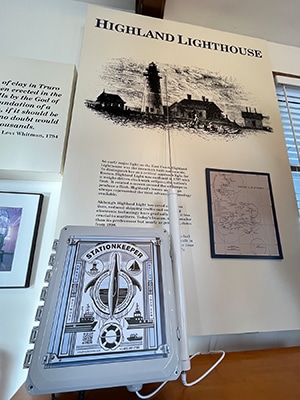
MotionInfo’s AIS-based StationKeeper technology – and its ability to help protect the North Atlantic right whale, was the key topic during a spring 2026 media event at Highland Light, North Truro, MA.
(Photo by Bob Trapani, Jr.)
Technology is also playing a major role as conservationists work to protect the North Atlantic right whale through the use of risk reduction and monitoring technologies, including MotionInfo’s Automatic Identification System (AIS) based conservation and marine safety network called StationKeeper.
The StationKeeper network stretches from Maine to Florida, and currently consists of 64 host sites. Of this number, over half of these cutting-edge units are housed in historic lighthouses.
Each StationKeeper is an AIS transceiver with real-time alert messaging functionality, designed to reduce vessel strikes on the North Atlantic right whale.
All of the aforementioned strategies are making a meaningful difference, but there is still more work to be done to ensure the recovery of the North Atlantic right whale. One way of helping augment this vital mission is through person-to-person interactions that raise greater public awareness for the plight of the right whale and solution-based technologies like StationKeeper.
Collaboration is the key!
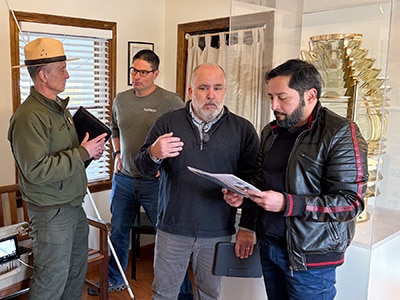
To save the North Atlantic right whale, collaboration is vital. (L to R) Bill Burke, Cape Cod National Seashore (NPS), Shaun Ruge, Garmin Marine, Moses Calouro, MotionInfo, and Daniel Palacios, Ph.D., Center for Coastal Studies.
(Photo by Ann-Marie Trapani)
In this spirit, the American Lighthouse Foundation (ALF) and MotionInfo organized a media event at the venerable Highland Light in North Truro, Massachusetts, on March 25, 2026. The event’s organizers, led by Gary Childs of the ALF’s Cape Cod Chapter, Moses Calouro and Portia Calouro of MotionInfo, and Ken Rose, Highland Light Operations Manager, assembled a wide-range of passionate stakeholders from Cape Cod and the Islands, to shine a light on the right whale dilemma and the applied science opportunities that can help them.
“This event shows that meaningful progress happens when diverse fields align, bringing together infrastructure, science, conservation, education, industry, and public awareness,” said MotionInfo’s Portia Calouro. “Seeing so many groups contribute their strengths toward a common goal is both effective and inspiring.”
The notion of strength in numbers was quite evident throughout the event.
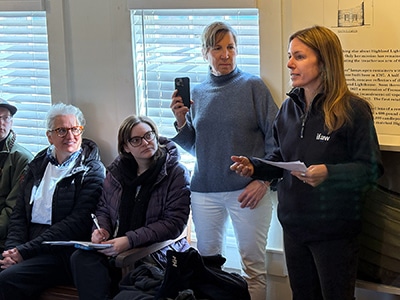
Stacey Hedman, Senior Director, Global Communications for the International Fund for Animal Welfare (right), mentioned the need to build upon the successes to date and to continue working together for the protection of the North Atlantic right whale.
(Photo by Bob Trapani, Jr.)
As Stacey Hedman, Senior Director, Global Communications for the International Fund for Animal Welfare, noted, “Strong public and private partnerships are essential if we are going to reduce the risks these whales face. No single organization can solve this alone. Protecting right whales requires coordination between conservation groups, government, technology partners, maritime industries, and coastal communities.
During the gathering at the historic light station, data was presented, equipment was highlighted and pertinent subject matter was shared – all within the shadow of the 1857 Highland Light, which stands high above storied sands and the Atlantic Ocean’s ever-restless surf.
The locale proved to be the perfect setting given the significant role lighthouses are playing as host sites for MotionInfo’s StationKeeper network, along with their unique ability to amplify the plight of the North Atlantic right whale to countless thousands of visitors.
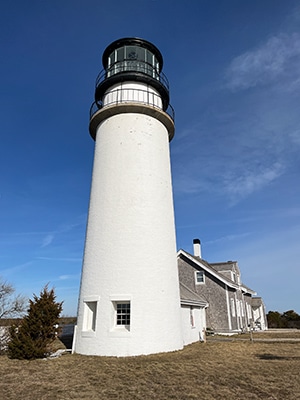
Highland Light, built in 1857, is one of Cape Cod’s most beloved historic sentinels.
(Photo by Bob Trapani, Jr.)
Many of the lighthouses serving as host sites for StationKeeper are open to the general public. When visitors climb a sentinel outfitted with this technology, they are learning about more than lighthouse history – they are also learning about the endangered North Atlantic right whale and the importance of marine conservation.
Drawing increased attention to the right whale issue, and promoting a better understanding of what is needed resource-wise for the species’ recovery, remains an imperative undertaking.
“From a rescue and conservation perspective, it means everything,” explained IFAW’s Stacey Hedman. “The North Atlantic right whale is one of the most endangered large whales on Earth, and with only about 380 individuals remaining, its future depends on collective action.”
Hedman went on to say, “When organizations like the American Lighthouse Foundation step forward, it shows that protecting whales is not just the responsibility of conservation groups—it’s a shared commitment across communities, sectors, and industries. What’s especially powerful is seeing partners bring their own expertise and legacy to the table. Lighthouses have always stood for safety and guidance, and now they are playing a role in protecting whales in the same waters. That kind of alignment between purpose and action is exactly what gives this species a fighting chance.”
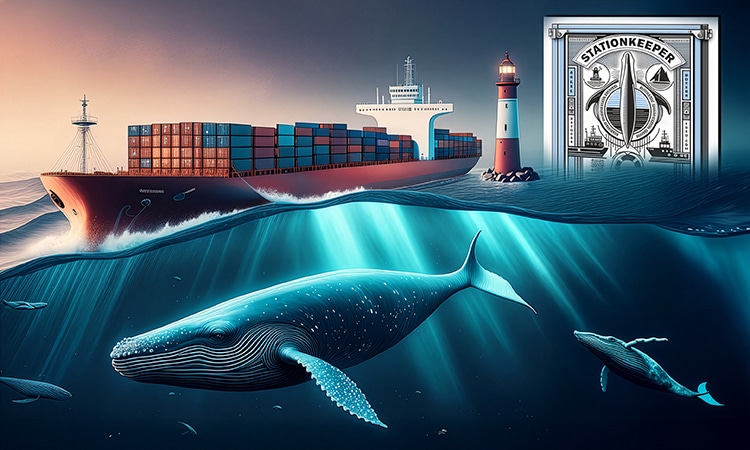
Lighthouses are serving as host sites for StationKeeper, enabling these historic guardians of the sea to help protect the North Atlantic right whale.
(AI image by Dominic Trapani)
Collaboration has transformed historic, land-based lighthouses into vital, 21st century assets for marine conservation. Traditionally, these timeless guardians of light and sound could only protect human life upon the sea; now, thanks to StationKeeper, they are helping safeguard marine life beneath the surface of the water as well.
Speaking of educational opportunities, lighthouses are not the only shining stars. As Portia Calouro noted, “Whale watch operators, like Dolphin Fleet and Hyannis Whale Watch, play a powerful role in public education. Each tour is an opportunity to inform passengers about whale habitats, migration, conservation challenges, and now to highlight active AIS messaging locations in the very waters they travel and the lighthouses they observe – making protection efforts visible and tangible.”
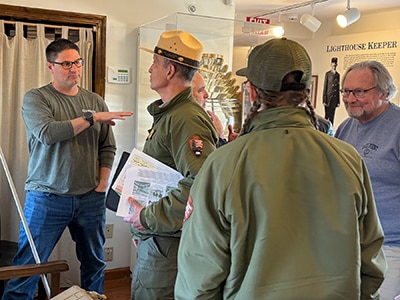
Shaun Ruge, Director of Marine Business Development at Garmin (left) shared how the company’s chartplotters are helping to protect the North Atlantic right whale.
(Photo by Ann-Marie Trapani)
Another exciting aspect of the media event at Highland Light was having the opportunity to view Garmin Marine chartplotters and learn how the company’s latest electronic equipment advancements are making a significant contribution to helping protect the endangered North Atlantic right whale.
Shaun Ruge, Director of Marine Business Development at Garmin, shared with attendees how their new AIS-based messaging feature is able to deliver real-time whale alerts to both recreational boats and commercial ships outfitted with Garmin chartplotters – regardless of size. This onboard navigational feature, which disseminates vital data and information to mariners, will help reduce vessel strikes on the right whale.
“Having marine electronic leaders like Garmin onboard is the final piece closing the loop between research and vessel operators, said MotionInfo’s Portia Calouro. “They are integrating safety messaging directly with chartplotters, upgrading their software and equipment – even retroactively, to ensure as many mariners as possible are able to receive critical information. When research knows where species are, we send their message and industry displays it to ship operators and boaters who can make timely, actionable decisions for the safety of their crew and endangered marine life.”
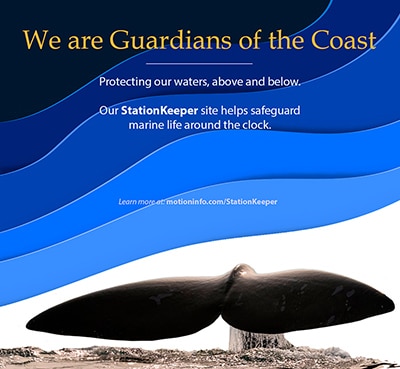
(Graphic courtesy of MotionInfo)
The background information and updates shared by the experts in attendance made it abundantly clear that when concerted action and cooperation meld with groundbreaking technologies, hopeful aims evolve into tangible successes.
“The more people understand that vessel strikes are preventable, and that solutions like AIS and vessel speed measures are already making a difference, the more momentum we can build for lasting change, said Stacey Hedman. “Awareness drives action, whether that’s supporting policy, changing behavior on the water, or backing conservation efforts. Together, partnership and public engagement create the conditions where real, measurable progress is possible.”
On hand to cover the event was NBC 10 Boston and The Provincetown Independent. Participating stakeholders were: American Lighthouse Foundation, Cape Cod National Seashore (National Park Service), Center for Coastal Studies, Dolphin Fleet Whale Watch, Garmin Marine, Gay Head Lighthouse, Highland Lighthouse, Hyannis Whale Watcher Cruises, International Fund for Animal Welfare, MotionInfo, Nauset Light Preservation Society, Pilgrim Monument and Provincetown Museum, Race Point Lighthouse, Sandy Neck Lighthouse and Sconset Trust (Sankaty Head Lighthouse).
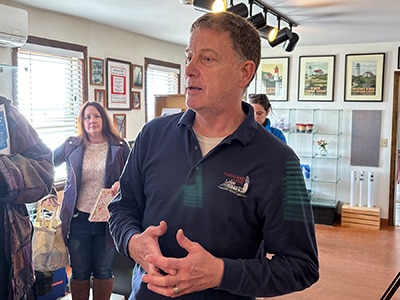
Ken Rose, Operations Manager for Highland Light.
(Photo by Bob Trapani, Jr.)
Ken Rose, Operations Manager for Highland Light and the event’s host site, summed things up beautifully, saying, “The event was important for me because, even though we all collaborate across time and space to care for our lighthouses and promote the role they have played – and still play, we rarely have an opportunity to assemble at the same time and at the same place to do that together. It was truly inspiring to be promoting MotionInfo’s StationKeeper network with all the folks from the other local Cape & Islands lighthouses, as well as the scientists and media representatives. It made me feel like I was part of a larger team.”
Teamwork is making a major difference as diverse partners from the public and private sector are coming together on behalf of the endangered North Atlantic right whale. No effort could be more inspiring!
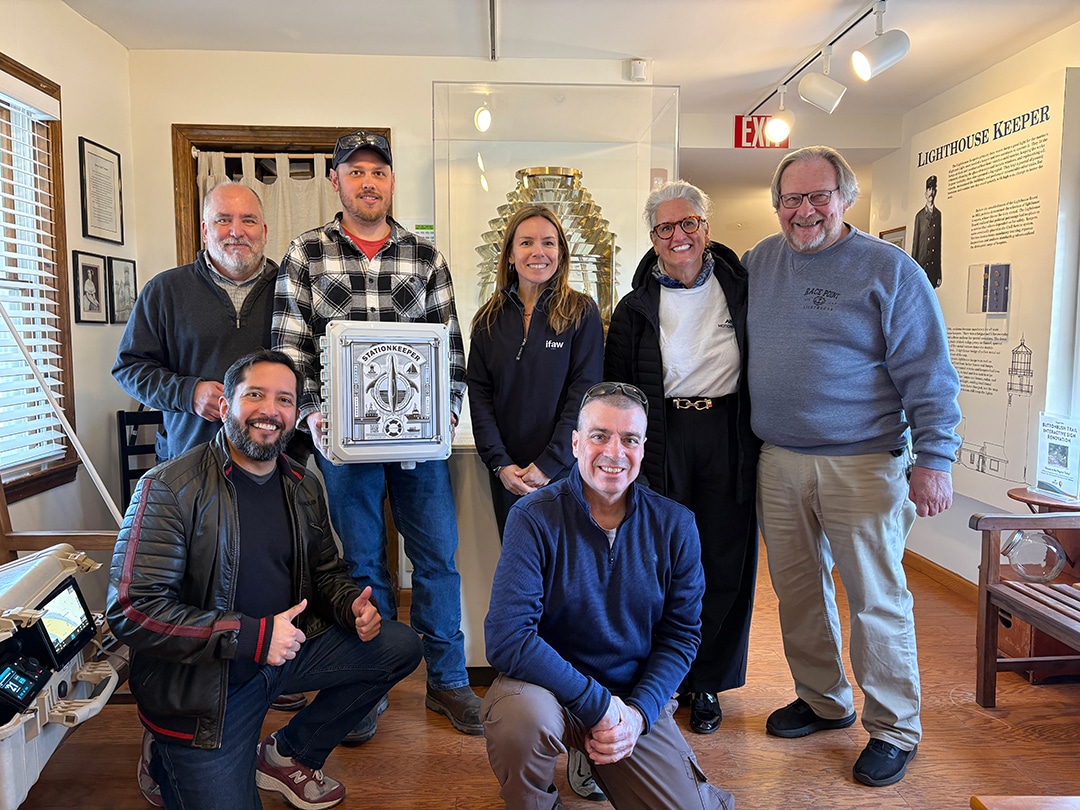
Teamwork! Saving the critically endangered North Atlantic right whale requires a collaborative effort between a wide range of stakeholders such as (Back…L to R) Moses Calouro, CEO of MotionInfo, Jared Fulcher, Nauset Light Preservation Society and ALF Board of Director, Stacey Hedman, Senior Director, Global Communications, International Fund for Animal Welfare, Portia Calouro, MotionInfo and Gary Childs, American Lighthouse Foundation Board of Director and ALF’s Cape Cod Chapter Chairperson. (Front…L to R) Daniel Palacios, Ph.D., Director of the Center for Coastal Studies Right Whale Ecology Program, and Bob Trapani, Jr., Executive Director, American Lighthouse Foundation.
(Photo by Ann-Marie Trapani)
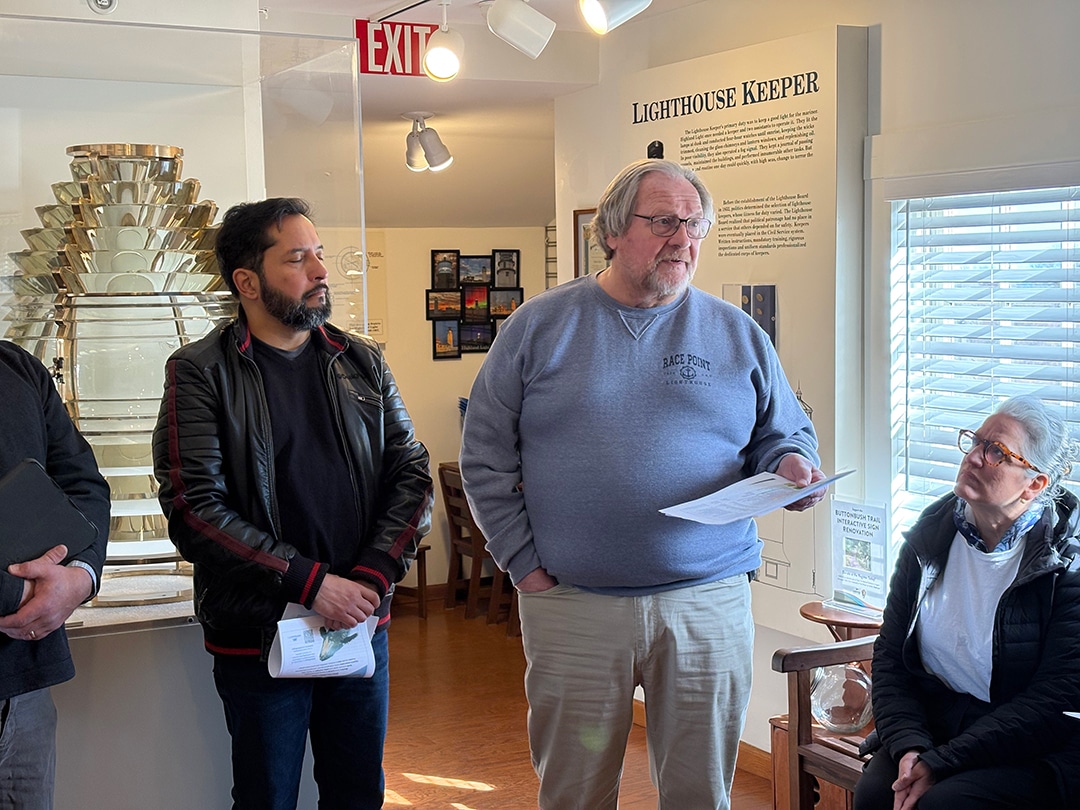
Gary Childs, American Lighthouse Foundation Board of Director and ALF’s Cape Cod Chapter Chairperson…
“The primary goal of the media event was to get the info out to the public that the lighthouses and the Pilgrim Monument, representing the Cape and Islands (Martha’s Vineyard and Nantucket), have made headway in hosting StationKeeper units at their sites. I wanted representatives from the host sites to be in attendance, meet each other and see that they were all part of this growing network. It was also important for the media to be there and learn of what is happening – and of course, spread the word about the collaborative efforts of all the partners involved.”
(Photo by Ann-Marie Trapani)
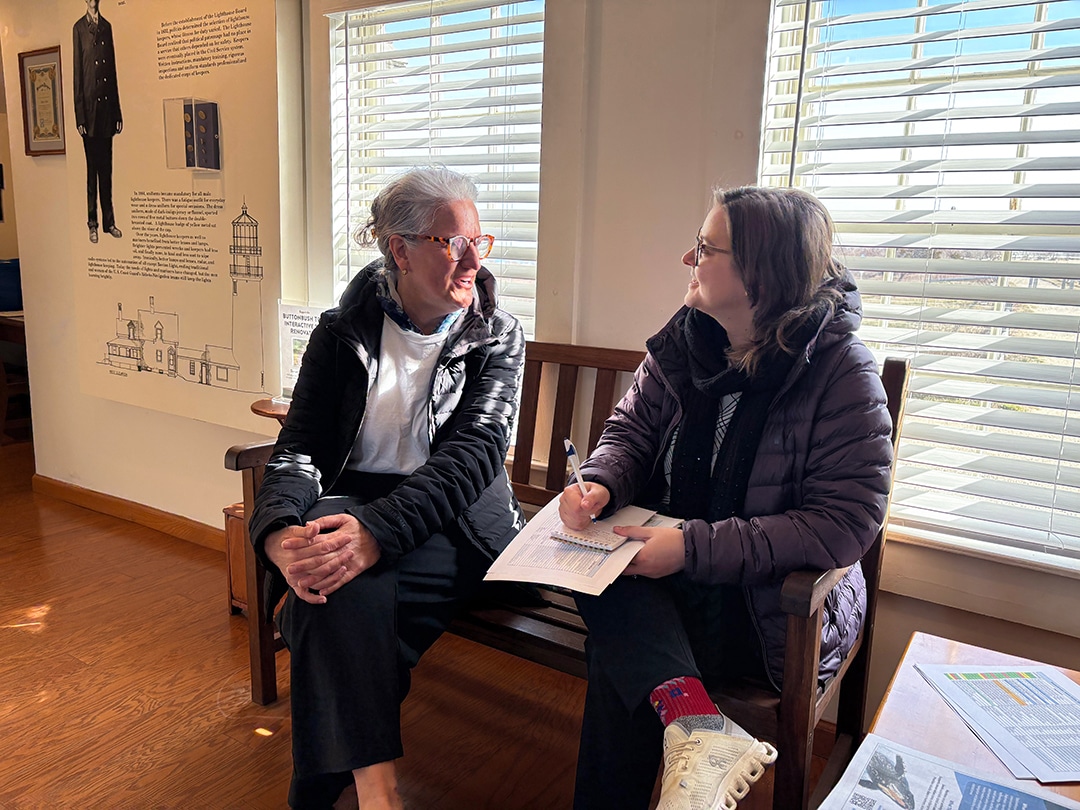
(L to R) Portia Calouro of MotionInfo and Delaney Dryfoos, Reporter, The Provincetown Independent, Portia noted…
“What stood out during the gathering is how many groups came together around a shared purpose. Starting with Cape and Island Lighthouses: Highland, Race Point, Nauset Beach, Sandy Neck, Sankaty Head, Gay Head and landmark locations like the Pilgrim Monument. All providing their established maritime safety locations for the system to bolt onto. The stewards at each site host the AIS equipment, while the parks and managing organizations allow research and conservation efforts to take place on their lands.”
(Photo by Ann-Marie Trapani)
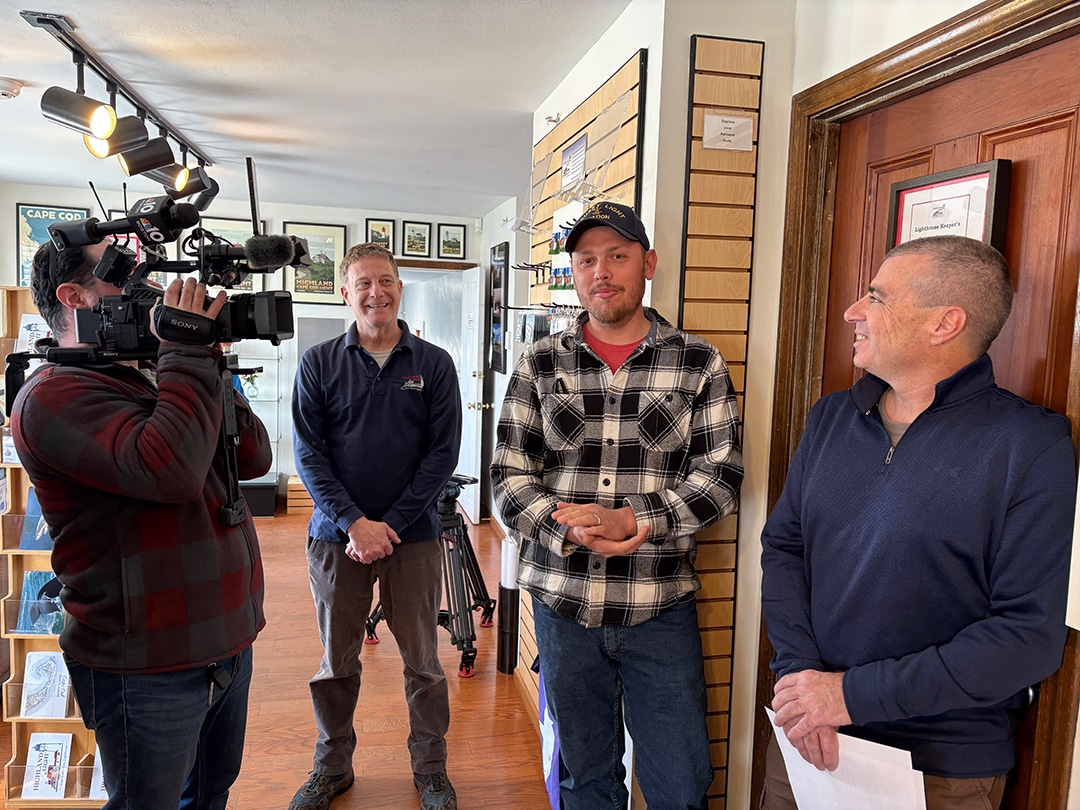
Jared Fulcher, Nauset Light Preservation Society and American Lighthouse Foundation Board of Director…
“Since this press event was covering the Cape and Islands, I thought it would be important to represent our light, as the StationKeeper installations have largely been a collaboration and a greatly concentrated effort among light stations and their keepers. Many hands of different talents across a variety of areas of expertise made this happen, not only on the Cape, but the length of the eastern seaboard. Besides the actual representation, it was great to put faces and names together of others involved in the effort. I was pleased that a rep from Garmin was present to show everyone exactly how the technology functions. I think that was important as sometimes the technological aspect can be lost on those who don’t regularly use it. Highland was not only a perfect location to gather everyone, but it gave all interested people a chance to see the AIS system in use at a lighthouse!”
(Photo by Ann-Marie Trapani)
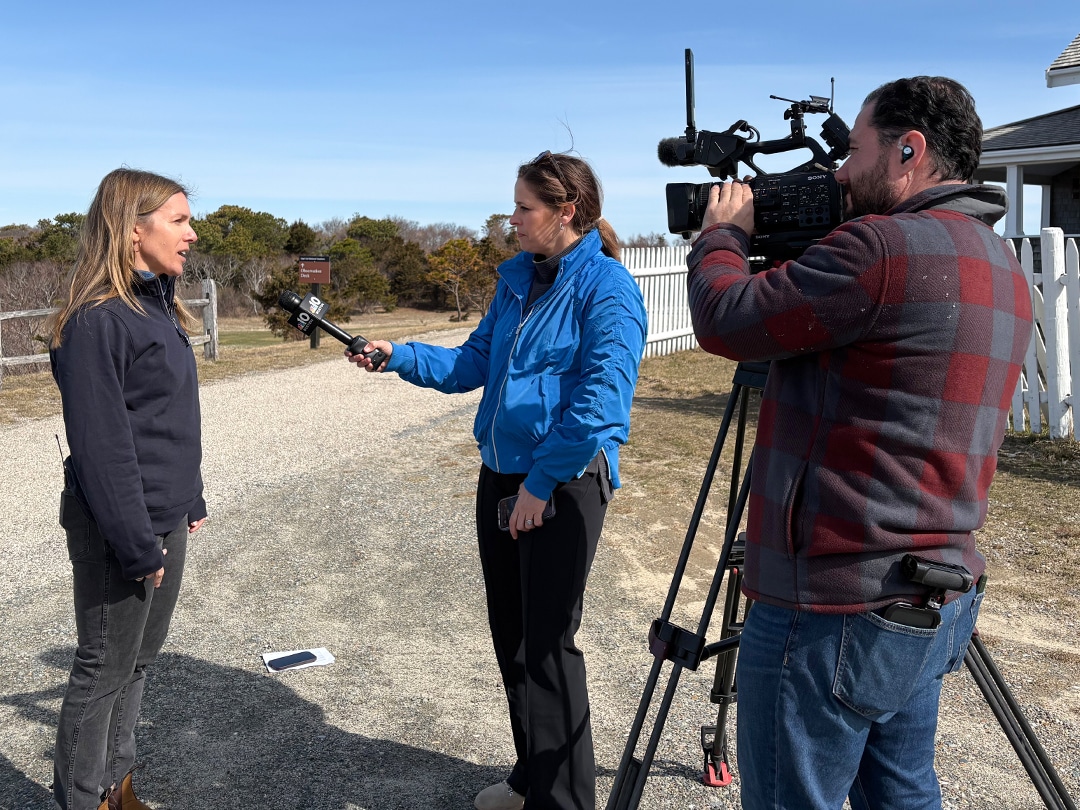
Stacey Hedman, Senior Director, Global Communications for the International Fund for Animal Welfare (left), speaking with Monica Madeja, NBC10 Boston reporter and anchor, at Highland Light on March 25, 2026. Stacey noted…
“This year’s calving season—23 new calves, more than any in the last 17 years—has given us a rare and hopeful sign that recovery is possible. But it has also reminded us how fragile that progress is. Every one of these calves will face risks from vessel traffic and other human pressures as they migrate along the East Coast. The encouraging part is that we know what works. Tools like AIS, combined with effective vessel speed measures and strong collaboration, can significantly reduce the risk of harm. The work being done through lighthouse-based AIS systems is a powerful example of how innovation and stewardship can come together in a very practical way. Now is the moment to build on that progress—to strengthen the solutions we know are effective, and to ensure that this year’s hope becomes a lasting trend for the species.”
(Photo by Ann-Marie Trapani)