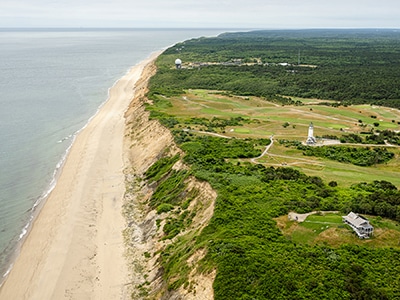
Highland Light, which is part of the Cape Cod National Seashore, presides over the Atlantic Ocean from its lofty perch, as well as spectacular natural beauty that embraces the historic site.
(Photo by Dominic Trapani)
Cape Cod, Martha’s Vineyard and Nantucket are some of the most sparkling jewels in the crown of our great nation.
If you appreciate history and culture, they have it in abundance. If you enjoy year-round beauty and adventure, Cape Cod and the Islands are for you. And if you love lighthouses and maritime heritage, their glistening tracts of sandy beaches and majestic bluffs will beckon you to draw near and learn of fascinating facts, fun and mystery.
But there is much more that makes Cape Cod and the Islands special to countless people the world over. The region’s pristine, natural environment is home to precious wildlife, seabirds, and some very large seasonal visitors – the endangered North Atlantic right whale. Adult right whales range from 35 to 55 feet long and can weigh up to 70 tons.
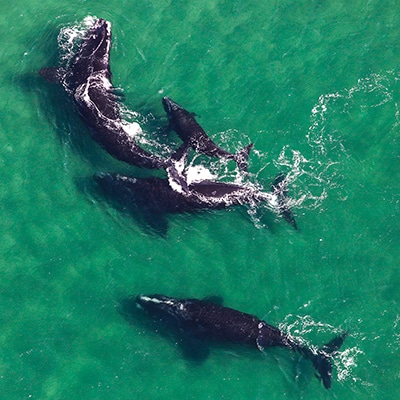
Right whale mom Black Heart (#3540) and calf (top), Avalanche (#4440 middle) and right whale #4304 (bottom) were in a surface active group just offshore of Herring Cove Beach in Provincetown, MA, on March 25, 2025. A surface active group is two or more right whales rolling and touching at the surface as part of social behavior.
(NOAA Fisheries/Brigid McKenna photo)
Each year, generally from December to May, North Atlantic right whales pay a visit to the waters of Cape Cod Bay, the Outer Cape and Massachusetts Bay to feed on concentrated amounts of zooplankton. According to the Commonwealth of Massachusetts website, “North Atlantic right whales can sometimes be seen from Massachusetts’ beaches feeding at the surface of the water, swimming through patches of zooplankton with their mouths open.”
Marine biologists, conservationists and the public are always enthralled at the sight of right whales feeding and socializing along coastal waters, but these marine mammals are also seriously threatened. Their safety and survival continues to hang in the balance despite having been listed as endangered under the Endangered Species Act since 1970.
Today, there are less than 380 North Atlantic right whales remaining, with fewer than 100 breeding females. “North Atlantic right whales face many threats, including entanglement in fishing gear, vessel strikes, changing environmental conditions—which may alter their migratory patterns and feeding areas—and the impacts of ocean noise on their ability to communicate, find food, and navigate,” says the National Oceanic and Atmospheric Administration (NOAA).

Barbell (#3414) was spotted on February 15, 2025, in Cape Cod Bay by a NOAA aerial survey team. Barbell is exhibiting “posturing” behavior, with both his head and tail out of the water at the same time. Scientists don’t know why right whales posture.
(NOAA Fisheries/Brigid McKenna photo)
When it comes to protecting the North Atlantic right whale, one of the primary focuses of federal, state, nonprofit and private sector conservationists is to greatly reduce the number of vessel strikes while the slow-moving right whale is traveling or feeding at or close to the surface of the water.
Presently, NOAA Fisheries is working with many partners to conserve and recover endangered North Atlantic right whales by using advanced technology, including the Automatic Identification System (AIS), which is federally mandated for all commercial and fishing vessels over 65-feet in length.
This maritime navigation communications technology is “a shipboard broadcast system that acts like a transponder, operating in the VHF maritime band that is capable of handling well over 4,500 reports per minute and updates as often as every two seconds,” says the U.S. Coast Guard.
In addition to providing information such as the vessel’s identity, course, speed, etc., AIS also receives navigation-related data from other similarly fitted ships in the vicinity, and can exchange data with shore-based facilities – including a number of lighthouses, but we will get to this a little later!
MotionInfo’s AIS-based StationKeeper technology is helping to protect the endangered North Atlantic right whale from vessel strikes.
(MotionInfo image)
First let’s learn how MotionInfo and their innovative AIS-based StationKeeper technology is making amazing strides in helping to protect the endangered North Atlantic right whale. MotionInfo, a maritime data company based in Massachusetts, developed StationKeeper to deliver targeted messages to vessels equipped with AIS in real time – complete with comprehensive historic tracking and data insights, in an effort to help safeguard the right whale.
The AIS messages cover both Seasonal Management Areas (SMA), which are mandatory slow zones such as Cape Cod Bay, and Dynamic Management Areas (DMA) that are classified as voluntary slow speed zones for vessels 65-feet and longer. In these DMAs mariners are highly encouraged to reduce their speed to 10 knots to help prevent collisions with whales.
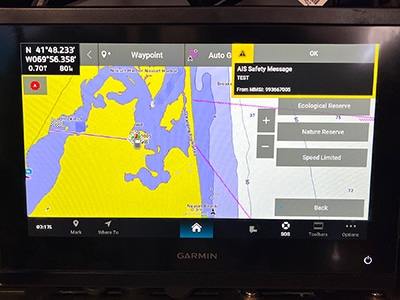
StationKeeper’s AIS messages appear on a vessel’s electronic chart display and information system, and must be cleared manually.
(Photo by Bob Trapani, Jr.)
StationKeeper’s safety messages also support environmental protection and safeguard the interests of mariners, including the vessel itself. What makes these messages/alerts effective is the fact that they must be cleared manually from onboard electronic navigation equipment, thus ensuring that they are seen. When mariners clear the message, an automatic receipt is sent.
As of February 2026, MotionInfo’s StationKeeper units are operational in over sixty (60) host sites from Maine to Florida. Over half of these sites are historic lighthouses. Speaking of lighthouses, the number outfitted with StationKeeper is growing for the venerable guardians that preside over Cape Cod and the Islands.
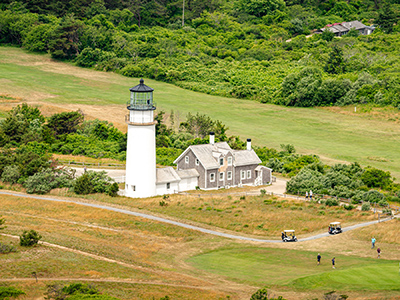
Highland Light, also known as Cape Cod Light.
(Photo by Dominic Trapani)
On January 31, 2026, following approval from the National Park Service who owns the historic light station, Highland Light became the sixth sentinel on the Cape and Islands to serve as a host site for StationKeeper. This sentinel is located on Outer Cape Cod within the Cape Cod National Seashore in North Truro.
By receiving this cutting-edge technology, the 1857 Highland Light – also known as Cape Cod Light, forged a new chapter in its storied history. The new system, brimming with an added safeguarding aspect through high-tech utility, demonstrates the evolving relevance of lighthouses here in the 21st century.
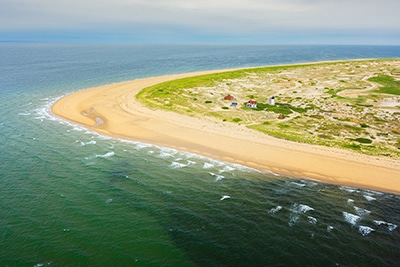
Race Point Light Station, located within the Cape Cod National Seashore and maintained by the American Lighthouse Foundation’s Cape Cod Chapter.
(Photo by Dominic Trapani)
As for its importance within the expanding StationKeeper network, Portia Calouro of Maritime Information Systems / MotionInfo, noted, “Highland is not only a key location for the system but a beautiful addition to the network. We were testing the system this summer, motoring along the outer arm of the Cape by boat; passing Pilgrim Monument first, then Race Point Lighthouse, then the Highlands of Truro. While contemplating the beautiful white structure high on the bluff I was hopeful that it would join the adventure we have been on.”
Calouro further stated, “Having the lighthouses of Cape Cod join this initiative has been instrumental in our work. Cape Cod Bay and the outer arm have been host to some of the largest gatherings of North Atlantic right whales each season. These structures now standing watch over the North Atlantic right whale migration is a story come full circle from hunting whales for the fuel they provided to protecting them for future generations to stand in awe of. There’s nothing quite like it.”
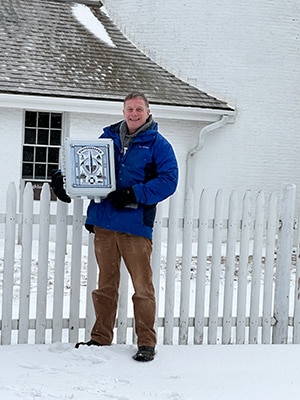
Ken Rose, Operations Manager for the Highland Lighthouse and Keeper’s Shop / Cape Cod National Seashore, holding the StationKeeper unit that was installed later that morning in Highland Light on 1/31/26.
(Photo by Jared Fulcher)
The in-the-field work to help protect the North Atlantic right whale is vital, but so too are efforts to raise public awareness for their plight through education and outreach initiatives. Here is where publicly accessible lighthouses like Highland, excel. As visitors learn of Highland Light’s history and continued use as an active aid to navigation, they will now have the opportunity to discover how lighthouses are broadening their purpose and positive impact within our coastal communities.
As Ken Rose, Operations Manager for the Highland Lighthouse and Keeper’s Shop / Cape Cod National Seashore, explained, “As the tallest lighthouse on Cape Cod (66-feet), with a lantern that is approximately 200 feet above sea level, and located strategically on the northern tip of the Cape, Highland Light is a key site that helps the network cover the seasonal migration areas of the North American Right Whales in the Cape Cod Bay, as well as in surrounding ocean waters.”
Rose went on to say, “Educating our visitors about the history and significance of Highland Light, and of lighthouses in general, is a core part of our mission. More than 15,000 people climb the lighthouse each season, and each of our visitors will be able to engage with our team members in worthwhile conversations about these innovative efforts to protect marine wildlife, coastal habitats and vessel safety.”

(L to R) American Lighthouse Foundation volunteers/board members Gary Childs and Jared Fulcher are well-versed in installing MotionInfo’s StationKeeper units.
(Photo by Owen Rogers)
On the day when StationKeeper appeared in the lantern of Highland Light, its arrival was marked by a few lighthouse connections, including bitter cold temperatures, a half-dozen or so trips up and down the tower and the skilled contributions of a Highland Light keeper’s great-grandson.
Spearheading the installation of StationKeeper in Highland Light were American Lighthouse Foundation (ALF) volunteers Gary Childs and Jared Fulcher – each no stranger to mounting and activating this AIS-based technology in the lantern of lighthouses on Cape Cod and the Islands.
As for dealing with the elements during an install, the Highland Light operation was by far the coldest. However, as evident throughout history, lighthouse work was often subject to being impacted by weather conditions. Nonetheless, just like the keepers of old, the install team persevered through the frigid temps.
“As I recall, the wind was NE/NNE and snow was flying,” said Jared Fulcher, American Lighthouse Foundation volunteer/board member (Jared is also a board member for the Nauset Light Preservation Society). “The lighthouse reservation was pretty well deserted in the cold temps. The lantern room still has sliding vents at the bottom of the curtain wall from IOV days and even with them closed, the lantern was slightly drafty. However, we were dressed for the occasion and enjoyed the work, even if the dexterity in our hands was low!”

ALF volunteer/board member Gary Childs working on installing StationKeeper in the lantern of Highland Light.
(Photo by Jared Fulcher)
Regarding the elements, Gary Childs, American Lighthouse Foundation volunteer/board member (also chairperson for ALF’s Cape Cod Chapter) noted, “We happened to pick the coldest day (January 31, 2026 0900-1330hr) of this winter season to date. The snow was blowing mostly 45 degrees across all the land around us. It was gorgeous but raw. With the sunlight, it was surprisingly warm enough to work on the installation of the StationKeeper.”
Bygone lighthouse keepers were quite familiar with the need to make multiple trips up and down the lighthouse during maintenance projects – coping all the while with a tower’s height, narrowness and overall restrictiveness. Though lightkeepers have been relegated to history, the light towers themselves are unchanging.
Modern day “keepers” must endure the same challenges as those before them – and Highland Light’s StationKeeper install was no different. The old adage, “As much as things change, they remain the same,” applies to this operation.
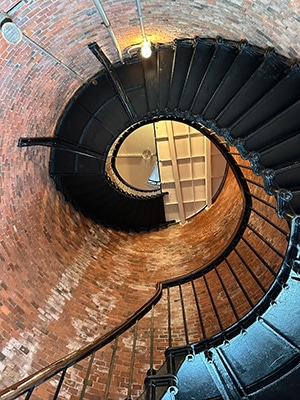
A view of the Highland Light staircase, which the install team made numerous trips up and down during the StationKeeper installation process on 1/31/26.
(Photo by Gary Childs)
According to Jared Fulcher, “The installation was pretty straightforward. Of course you know that there’s a lot of tools and equipment that go with installation, and hiking all that heavy equipment up and down the tower was a workout! I think we made about five or six round trips in the tower. Also, the hatches to both the watch deck and lantern are very narrow and made moving up and down somewhat difficult.”
Somewhere, Highland Light’s long list of keepers are smiling and humorously saying, “We know all too well the drill!”
Speaking of the actual installation, Gary Childs reminds us that no matter how well-planned an evolution is, there are always a few surprises to contend with. But true to Gary’s determination and ingenuity, all challenges were overcome!
“The StationKeeper box and antenna were placed on the backside of the safety railing as you come up the ladder stairs from the watch room to the lantern room. As with each of these installations, a little ‘Murphy’s Law’ comes along,” Childs noted. “We did some cutting and fitting, and affixing equipment items in a manner to be somewhat prominent without being intrusive, yet in a way that still encouraged discussion about the North Atlantic right whale from a preservation and conservation point of view for the Highland Light docents during guided tours.”
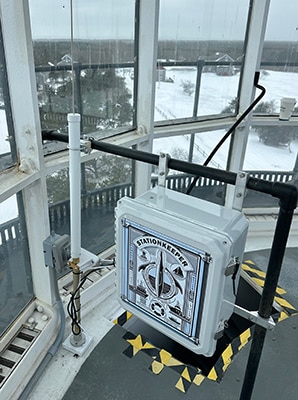
A view of the StationKeeper unit and antenna in Highland Light.
(Photo by Gary Childs)
Childs further stated, “This installation included thought on how best to machine aluminum and stainless steel hardware to strongly connect the components, but still account for visitors who might inadvertently reach for them as a steadying hand-hold. All sharp edges were assessed and dressed, and all the wiring was situated ‘out of harm’s way.’”
Though MotionInfo’s StationKeeper technology can operate just as effectively on either electric or solar power, the installation process is generally more simplified when commercial power is available. Since Highland Light did not have an electric outlet in the lantern, the install team had to overcome this hurdle prior to establishing the unit.
Gary Childs described the process, saying, “Owen Rogers, the contracted electrician, worked first in the watch room to tie-in the 110 volts AC power, before making his way up to the lantern room to finish the installation of the 110 VAC with a GFI safety outlet. All efforts were made to ensure the power supply, antenna, and related box installation appeared clean and neat given the fact that this lantern welcomes many visitors during the summer season.”

(L to R) Electrician Owen Rogers and Gary Childs working in Highland Light’s lantern. Owen Rogers is the great-grandson of Highland Light keeper John R. Forrest.
(Photo by Jared Fulcher)
What made this StationKeeper installation project even more special was its connection to a former Highland Light keeper – John R. Forrest, who served as a first assistant keeper at the light station from 1905 to 1907. Owen Rogers, the electrician who installed the commercial power capabilities in the lantern of Highland Light, happens to be the great-grandson of keeper Forrest. Talk about cool!
According to Jared Fulcher, first assistant keeper John R. Forrest passed away at the light station around Christmas in 1907. Mr. Forrest also served at Race Point, Pamet and Chatham life-saving stations on Cape Cod.
As for the historical connections, unique location and present day significance, Jared Fulcher noted, “Highland is the Cape’s oldest operating light station, and also the tallest on the highest elevation, as well the only First order light to be built here. It is as important historically as it is logistically because its remote northeast location is where shipping traffic in and outbound of Boston Harbor passes the Cape at its nearest point; precisely why its establishment was petitioned by the Boston Marine Society. Because the light is located at the narrowest part of the Cape, its AIS coverage of both the Atlantic and Cape Cod Bay make it likely the most advantageous site for a StationKeeper. Highland is also the most publicly accessible and thus, the public will get a chance to see the StationKeeper unit working here, where they might not at other lights.”
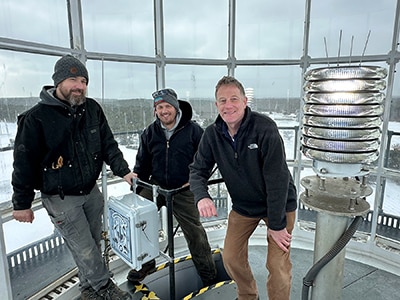
History was made at Highland Light with the installation of StationKeeper! (L to R) Owen Rogers, electrician, Jared Fulcher, ALF volunteer/board member and Ken Rose, Operations Manager for the Highland Lighthouse and Keeper’s Shop / Cape Cod National Seashore.
(Photo by Gary Childs)
Ken Rose, Operations Manager for the Highland Lighthouse and Keeper’s Shop / Cape Cod National Seashore, summed up this historic occasion, saying, “Highland Light is excited to be a part of the growing StationKeeper network, partnering with MotionInfo and the American Lighthouse Foundation to install broadcast components of the system on our lantern deck.”
Here is the current list of lighthouses along Cape Cod and the Islands that are outfitted with MotionInfo’s AIS-based StationKeeper system (in order):
Sankaty Head Lighthouse, Nantucket, Sconset Trust
Race Point Lighthouse, Provincetown, American Lighthouse Foundation
Sandy Neck Lighthouse, Barnstable, privately owned…ALF Project
Aquinnah (Gay Head) Lighthouse Martha’s Vineyard, Town of Aquinnah
Nauset Lighthouse, Eastham, Nauset Light Preservation Society…ALF Affiliate
Highland Lighthouse, North Truro, Cape Cod National Seashore…Eastern National partner
The American Lighthouse Foundation is working closely with MotionInfo to further broaden the StationKeeper network throughout New England and beyond, and assisting with the installation process of AIS units where possible. The collaboration is very rewarding – and the positive impact is nothing short of amazing!
To learn more about MotionInfo’s StationKeeper technology, visit: www.motioninfo.com/stationkeeper

(MotionInfo graphic)